Indonesia’s Shrinking Middle Class and Economic Pressure
Since 2019, nearly 10 million Indonesians have slipped out of the middle class, according to government statistics. Between 2019 and 2024, this contraction has been driven by a combination of factors:
- Job losses in the manufacturing sector, particularly textiles
- Rising competition from lower-cost manufacturing hubs such as China
- An increase in consumption taxes
- Gaps in social safety nets following COVID-19
Manufacturing layoffs have disproportionately affected middle-income households, reducing disposable income and weakening demand for durable goods—including two-wheelers.
Middle-Class Decline and Its Impact on Two-Wheeler Demand
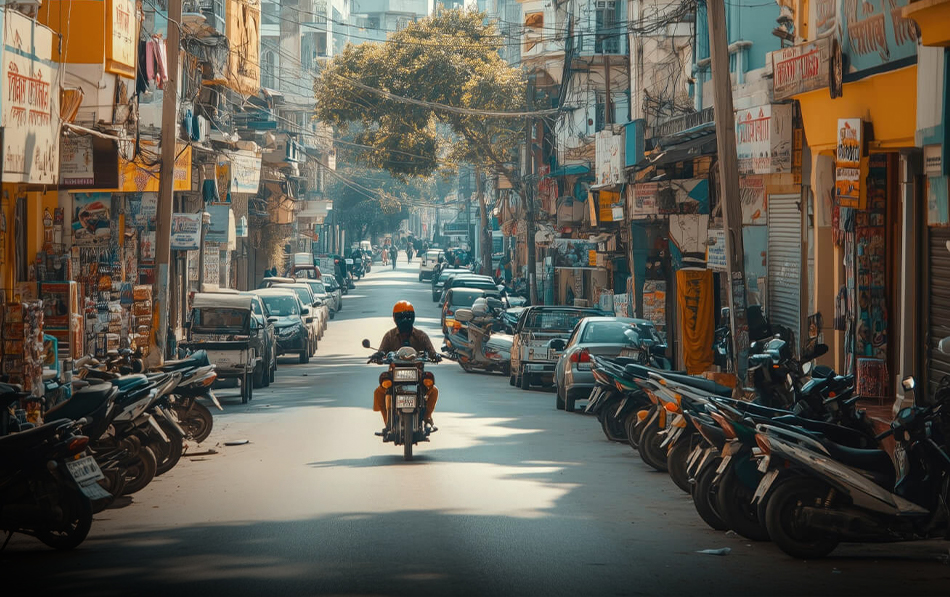
Motorcycles are a critical mode of transport in Indonesia due to their affordability, fuel efficiency, and suitability for dense urban environments. Historically, demand has closely tracked middle-class purchasing power.
- Between 2018 and 2022, motorcycle demand grew by 3%
- In 2023, the market rebounded strongly post-pandemic
- In 2024, demand reversed course, registering –1.7% year-on-year growth
The weakening purchasing power of the middle class has slowed replacement cycles and deferred new purchases, directly impacting overall two-wheeler volumes.
Electric Two-Wheelers Gain Attention Amid Affordability Pressures
While the broader two-wheeler market is slowing, electric two-wheelers (e2Ws) are gaining traction—albeit from a low base.
Key drivers include:
- Government incentives supporting EV adoption
- Continuous new product launches from domestic and international EV manufacturers
- Rapid growth in e-commerce, prompting logistics and delivery companies to electrify their fleets
- Entry of established internal combustion engine (ICE) players into electric product lines
Major delivery and e-commerce operators are increasingly transitioning to electric motorcycles to meet sustainability targets and reduce operating costs, accelerating early-stage adoption.
Government Intervention to Revive Two-Wheeler Demand
To stimulate domestic demand and accelerate electrification, the Indonesian government has committed USD 455 million toward electric two-wheeler subsidies.
Key elements of the policy include:
- Subsidies for 800,000 new electric motorcycles
- Conversion of 200,000 ICE motorcycles into electric variants
- A purchase incentive of approximately USD 435 per electric motorcycle
Although the electric motorcycle segment is currently small, it is growing at over 96% year-on-year, signalling strong momentum. Additionally, Indonesia’s newly elected president has pledged to boost economic growth and create 19 million new jobs, which could support medium-term recovery in consumer demand.
Competitive Landscape: Market Leaders Under Pressure
Indonesia’s two-wheeler market remains highly concentrated.
- Honda and Yamaha, which together account for over 95% of domestic demand, both reported declining sales in 2024
- Honda: –1.15% growth
- Yamaha: –3.91% growth
- Kawasaki was the only major OEM to record positive growth, at just over 3%
Meanwhile, competitive dynamics are shifting with the entry of global EV players.
Yadea’s Strategic Bet on Indonesia
Chinese electric two-wheeler giant Yadea has announced a major investment to manufacture electric scooters and motorcycles locally. Its new production facility features advanced manufacturing technologies and an annual capacity of 300,000 units, positioning Yadea as a serious contender in Indonesia’s emerging EV segment.
Outlook: Decline Today, Transition Tomorrow
Indonesia’s two-wheeler market is undergoing a structural transition. The current decline is less a collapse in mobility demand and more a reflection of economic stress on the middle class. While traditional ICE two-wheelers face near-term pressure, electric two-wheelers are benefiting from policy support, commercial fleet demand, and long-term sustainability goals.
The pace of recovery will depend on:
- Job creation and wage growth
- Stability in household consumption
- Effectiveness of EV subsidies and infrastructure rollout
In the near term, the market remains challenging. Over the longer horizon, Indonesia’s two-wheeler ecosystem is likely to emerge more electrified, more competitive, and structurally different from the past decade.


 RefractOne
  RefractOne